
Leadership, diversity, and craft: an interview with Stefane Rosa, CEO, US
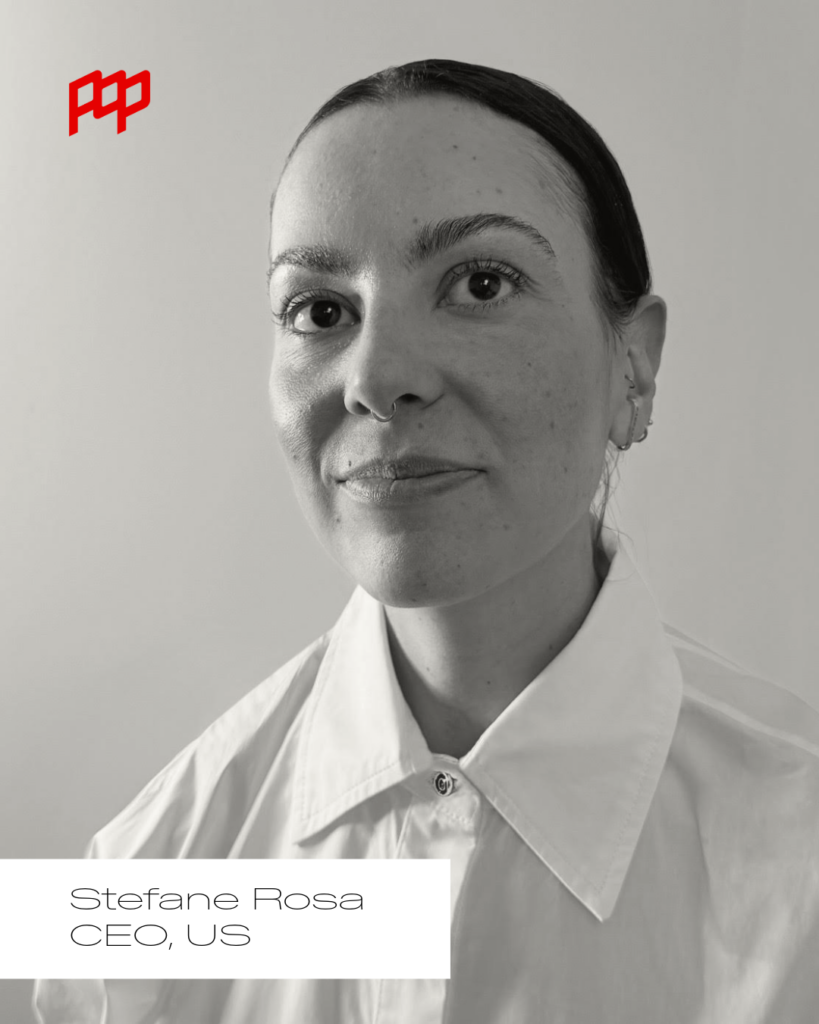
Stefane Rosa joined POP as CEO, US a few months ago – but her story started way before that. Hailing from Brazil, her journey through other global agencies and eventually to leading a company in the US market led her to have a very unique point of view, especially in the borderless environment of POP.
In this insightful conversation, Stefane shares her philosophy on leadership and how this has guided her career. She talks about the evolution of creativity, the crucial balance between human craft and AI in an ever-changing industry, and how POP is making a difference by building smarter production systems.
Keep reading for the perspective of a leader who brings a truly borderless approach to craft and creativity.
Can you tell us about your journey from Brazil to leading a company in the US?
I started my career in Brazil and spent more than a decade growing inside agencies like Ogilvy and DAVID, working closely with creatives while focusing on business and leadership. Brazil teaches you to move fast, solve problems creatively, and build relationships deeply, because the market is incredibly dynamic and competitive.
Over time, I had the opportunity to work on global brands, move to Miami and later New York, help launch the Droga5 São Paulo office, and eventually return to NYC. That transition was not just geographical – it was also cultural and personal. Moving countries forces you to relearn how to lead, communicate, and build trust.
Today, leading POP US feels like the combination of everything I learned across those chapters: creativity, operational thinking, cultural sensitivity, and the ambition to help build what the future of production and content can look like.
How would you define leadership, and how has that definition guided you in your career?
To me, leadership is about creating belief. Belief in the vision, belief in the people, and belief that the work can be better than what exists today.
I don’t think leadership is about having all the answers. It’s about creating clarity, momentum, and energy around where you are going together. The best leaders I’ve worked with were the ones who made people feel seen, challenged, and safe at the same time. I try to lead the same way.
Especially in creative industries, people remember how you made them feel during hard moments. That matters as much as the final result.
Looking back, if you could choose one life-changing moment or decision in your journey, what would that be?
Moving to the US was definitely life-changing, both personally and professionally. Leaving behind the comfort of a successful career in Brazil to start over in a different market takes a lot emotionally.
But I think the biggest decision was choosing growth over certainty multiple times in my career. Joining new ventures, helping build new offices, stepping into uncomfortable leadership roles, saying yes before feeling fully ready. Those moments shaped me the most.
What is your role at POP? What does a typical day look like for you?
As CEO of POP US, my role is really about helping shape what the next version of POP can become. Not just optimizing the business we have today, but helping build the production company the industry will need tomorrow.
Since I joined just around three months ago, I’ve been staying extremely close to the day-to-day of the business. That means learning how we operate, understanding our clients and agency partners deeply, and seeing where the biggest opportunities are for POP to evolve and grow.
My days are a mix of client conversations, operational decisions, creative and AI discussions, growth opportunities, internal leadership, and a lot of collaboration across markets and disciplines. There’s honestly no “typical” day anymore – one moment I’m discussing AI workflows and production models, the next I’m reviewing a creative idea, meeting clients, or talking about talent and culture. That’s what makes it exciting.
You moved from a massive advertising company to lead a content-at-scale business. How do you see this transition?
I actually see it less as a transition and more as an evolution of creativity itself.
The industry spent years separating “big creative ideas” from “production and execution”, but today those worlds are collapsing into one connected system. Ideas now need to live across hundreds of touchpoints, markets, formats, and audiences almost instantly.
What excites me about POP is that we sit exactly at that intersection of creativity, craft, technology, and scale. The future is not just about making more content – it’s about building smarter creative systems that can move with culture and business needs in real time.
As a Brazilian woman, how has your background shaped the lens through which you lead a borderless (and therefore, diverse!) network?
Being Brazilian naturally gives you a more adaptive and human way of navigating the world. Brazil is incredibly diverse, emotional, creative, and resilient. You grow up learning how to connect with different types of people very quickly.
I also think coming from outside the traditional US or European leadership path gives me a different perspective on talent and creativity. Great ideas can come from anywhere. Innovation can come from anywhere. Leadership can come from anywhere.
That mindset becomes very important when you are leading a global network. The goal is not to make every market think the same way. The goal is to create a system where different perspectives actually make the work stronger.
In such a competitive world with so much content, how do you think POP’s expertise makes a difference?
Most brands are not struggling to create content anymore. They are struggling to create relevance at scale while maintaining quality, consistency, speed, and business efficiency.
That’s where POP makes a difference. We combine creative thinking, operational excellence, technology, AI, and production expertise into one connected model. We think about content as systems, not isolated assets. That changes everything. It allows brands to move faster, adapt faster, localize faster, and stay culturally relevant without rebuilding from scratch every single time.
Talking about creativity, how do you find the right balance between human craft and relevance in an AI-driven industry?
AI should enhance creativity, not flatten it. The human part is still the most important part: taste, emotion, intuition, cultural understanding, storytelling, judgment. AI can accelerate processes, unlock scale, and remove friction, but it cannot replace human perspective and originality.
The risk for the industry is confusing efficiency with creativity. Faster does not automatically mean better. The real opportunity is using AI to free creative people from repetitive tasks so they can spend more time thinking, crafting, and pushing ideas further.
How do you see the future of content, creativity, and craft at scale? Where do you see the production world in the next years?
I think production is becoming one of the most strategic parts of the creative process again. The future will belong to companies that can combine creative quality, operational intelligence, AI integration, and cultural speed all at once. The old model of creating one hero asset and adapting it endlessly is evolving into modular, adaptive ecosystems of content.
We’ll also see production becoming much more connected globally. Talent, ideas, workflows, and execution will move across borders more fluidly than ever before.
But at the center of all this technology, craft will matter even more. Because when everyone has access to the same tools, taste, vision, and humanity become the real differentiators.
Want more from POP? Don’t forget to follow us on LinkedIn and Instagram to never miss a thing.
Comments are closed.