
Building a Culture Where People Thrive: An Interview with Kate Johnson, SVP, Operations UK
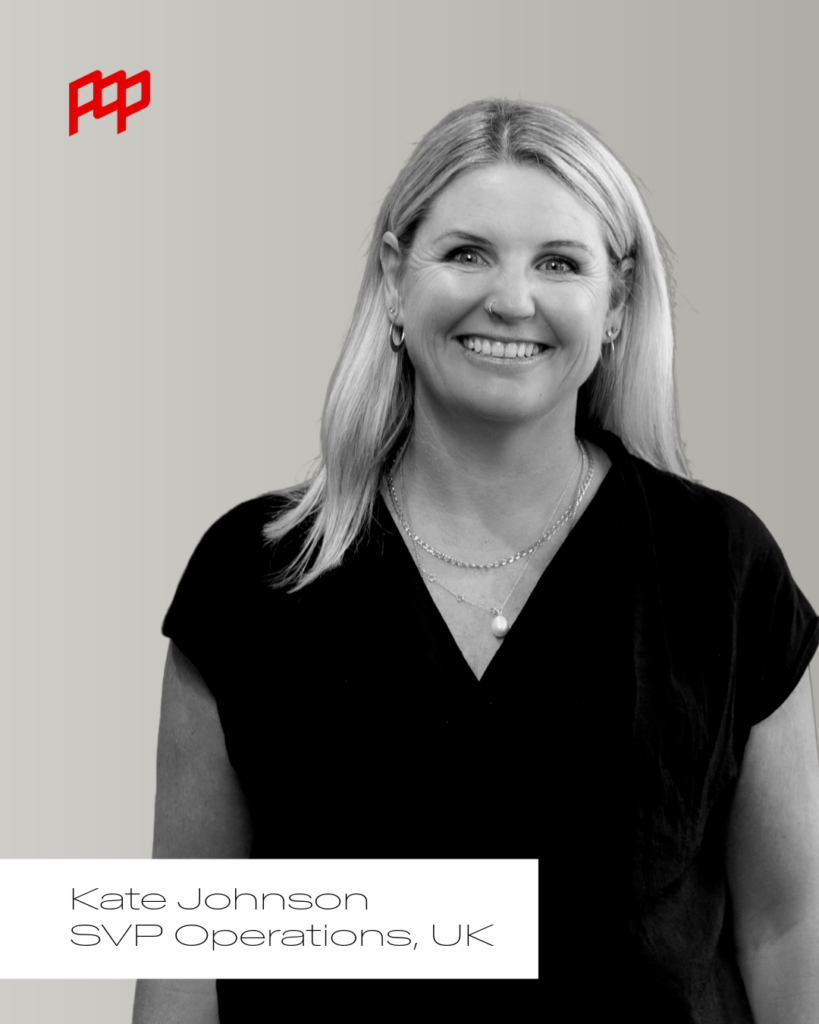
Born and raised in South Africa, Kate Johnson started her career in digital design and development, building digital experiences as a designer and front-end developer. But alongside a passion for the craft itself, she became increasingly interested in what happens behind the scenes: how teams work together, how decisions get made and what enables great work to happen consistently.
Over time, that interest shaped a career spanning agencies, in-house teams and global networks, helping organisations navigate growth, transformation and change. Today, as Senior Vice President, Operations (UK) at POP, she focuses on creating the clarity, culture and foundations that allow teams and clients to thrive.
In this conversation, Kate shares her people-first perspective on leadership, future-ready operating models and the role of AI in modern production. She also reflects on building healthy team cultures, leading through ambiguity and why the most effective operations are often the ones based on trust.
Can you tell us about your career journey that led you to your role at POP today?
My career started in digital as a designer and front-end developer. Having studied digital design, development and animation in South Africa, I began by building digital experiences, which gave me a strong appreciation for both the craft behind the work and the technical expertise needed to bring ideas to life.
Early on, I realised I was just as interested in the people and process behind great work as I was in creating it myself. I wanted to understand what helps teams do their best work, what gets in their way and how we create the right conditions for creativity and delivery to thrive. That naturally led me into studio management before progressing into broader leadership roles as Digital Lead and later Head of Operations.
A big part of my career has involved helping teams and businesses navigate change. I’ve worked on transformation programmes, onboarded global clients and helped shape ways of working that balance quality, creativity and commercial reality. Those experiences taught me that good operations isn’t about adding more process, but making it easier for people to do great work consistently.
Over time, I moved fully into operational leadership roles across agencies, in-house teams and global networks, working with brands including Unilever, Virgin, Beats, Kayak, Barclays, KPMG, PwC, CBRE, Korn Ferry and The Guardian.
Looking back, the common thread throughout my career has always been people. Whether I was designing, leading delivery, driving operational change or supporting teams, the part I’ve enjoyed most has been helping people succeed and creating the conditions for great work to happen.
At POP, that comes together naturally. We’re a production business first and foremost, so my focus is always on helping teams navigate complexity, making delivery simpler and ensuring we’re set up to produce great work for clients at scale.
One of the biggest lessons I’ve learned along the way is that success is rarely about having the perfect plan. It’s about building great teams, creating clarity when things feel uncertain and giving people the confidence and support to make decisions. The longer I’ve worked in leadership roles, the more I’ve realised my job isn’t to have all the answers. It’s to help good people make good decisions and remove the things that get in their way.
What is your role at POP? What does a typical day look like for you?
My role is focused on the day-to-day running of the business, making sure we have the right foundations, people, processes and capabilities in place to deliver for our clients while supporting sustainable growth.
The reality is that no two days are ever the same, which is one of the things I enjoy most about the role. A typical week might involve supporting teams delivering complex client projects, reviewing business performance, shaping our operational strategy, meeting with clients or working alongside our leadership team on new business opportunities. A significant part of my role is balancing what’s happening in the business today with what we need to do to prepare for tomorrow.
There’s also a huge amount of juggling involved. Operations sits at the centre of everything, so priorities can change quickly. A large part of my role is balancing what’s right for the business, what’s needed for our clients and what’s best for our people. Those priorities don’t always line up perfectly, so a lot of leadership comes down to making thoughtful decisions and being comfortable with ambiguity.
Sometimes that means making a quick decision to remove a blocker and keep things moving. Other times it means slowing down, bringing the right people together and taking a more considered approach. Knowing the difference between those moments is one of the most important parts of the job.
Much of my role is about connecting the dots across teams and helping people move forward. Sometimes my role is simply listening. Sometimes it’s helping a team work through a challenge or offering a different perspective when they’re too close to the problem. And sometimes it’s making the harder decisions that not everyone will agree with, but that are needed for the good of the business. A big part of leadership is recognising what people need from you in that moment and adapting accordingly.
Outside of work, I’m also a parent, so there’s plenty of juggling there too. Like most people, I’m constantly reprioritising between work commitments, family life and everything else that comes with a busy schedule. If anything, it’s taught me that plans don’t always go to plan, and that’s okay. Being adaptable, staying calm under pressure and keeping things in perspective are often more valuable than trying to have every answer.
While my role sits within operations, the reality is that most of the job comes back to people. The systems, processes and technology matter, but they’re only useful if they help talented people do great work.
How would you define leadership, and how has that definition guided you in your career?
For me, leadership is about creating clarity, trust and accountability. It’s helping people understand where we’re heading, giving them the confidence to contribute and creating an environment where they can do their best work.
I’ve always believed the strongest leaders spend as much time listening as they do talking. Sometimes leadership is about giving people space and trusting them to work things out for themselves. Other times it’s about stepping in, helping unblock a situation or making a difficult decision when it’s needed. Knowing the difference is important.
For me, leadership is less about directing people and more about creating the conditions for success. When people have clarity, support and accountability, they’re usually capable of achieving far more than they realise themselves.
Some of the best decisions I’ve made have come from being open to different perspectives and trusting the expertise of the people around me. I’ve never achieved anything worthwhile on my own. The best results always come from good people working together and challenging each other in the right way.
How has your background in digital design shaped your approach to operations?
Having started in digital design has been incredibly valuable because it gave me an appreciation for both the creative and technical sides of the work. I understand many of the challenges delivery teams face because I’ve experienced them myself.
Having come from a creative and technical background, I’ve always been conscious that process should support great work, not get in the way of it. Whenever I’m designing an operating model or a new way of working, I try to view it through the eyes of the people doing the work every day.
Good operations should never feel like bureaucracy. At its best, it creates clarity, removes unnecessary complexity and gives talented people more space to focus on what they do best.
My design background also taught me to think about experience. I apply that same thinking internally now, looking at how we can make it easier for teams, clients and partners to work together.
Looking back, if you could choose one life-changing moment or decision in your journey, what would that be?
The biggest decision was stepping away from a specialist discipline into broader operational leadership.
At the time, I didn’t have all the answers and I certainly didn’t feel completely ready, but I’ve learned that most meaningful opportunities arrive before you feel fully prepared for them.
That decision opened up an entirely different career path and taught me one of the most important lessons I’ve carried throughout my career: growth rarely happens when you’re comfortable. The moments that stretch you are usually the moments that teach you the most.
You’ve led teams across agencies, in-house groups and networks. What does a healthy operations culture look like and how do you know it’s there?
A healthy operations culture is one where people have clarity, feel trusted and understand how their work contributes to the bigger picture.
You can see it in how teams collaborate, how problems are solved and how people support each other through change. In strong cultures, information flows openly, decisions are made efficiently and people feel comfortable contributing with ideas and perspectives.
For me, a healthy culture is also one where people feel comfortable speaking up, asking questions and challenging ideas respectfully. If everyone agrees all the time, we’re probably missing something.
Healthy cultures aren’t defined by the absence of challenges. They’re defined by how teams respond to those challenges together. When people feel engaged, accountable and genuinely invested in the success of the business, that’s usually the clearest sign things are working.
What does a future-ready operating model mean to you?
The reality is that our industry changes constantly. The operating model has to be flexible enough to adapt without rebuilding everything every time a client need, new channel or market shift comes along.
Clients need content across more channels, audiences and formats, often at pace. But for a production business, the challenge isn’t simply producing more content. It’s making sure the work is right, the process is clear and quality, governance and craft aren’t lost along the way.
That requires clear ways of working, the right mix of specialist skills, sensible use of technology and enough structure to keep things moving without creating unnecessary complexity.
For a production business, being future-ready is about scaling without losing what makes the work effective. If we can continue to adapt while protecting quality, delivery and craft, we’ll be in a good position regardless of what comes next.
How has AI changed the industry and your role, and how do you see operations evolving?
AI has been a huge learning curve for me, and I’ve genuinely loved every minute of it. It’s moving incredibly quickly and continues to challenge how we think, how we work and how we support teams and clients.
For me, the value of AI is in the practical ways it can help production teams work better. It can take some of the manual effort out of repetitive tasks, improve workflows and help people get to information more quickly.
I don’t see AI replacing people. I see it creating more space for people to focus on the things that require human judgement, problem solving, creativity and experience. It is an incredibly powerful enabler, but it still needs human oversight, accountability and common sense. It’s not enough to ask whether something can be automated. We also need to ask whether it should be and whether it genuinely improves the outcome.
Looking ahead, I think one of the biggest responsibilities for operations leaders will be understanding where AI adds value and where human judgement still needs to lead. The technology will continue to evolve, but our role is making sure it supports better work rather than simply faster work.
How does the borderless nature of POP’s work and culture affect your role in operations?
It’s one of the most exciting aspects of the role. POP works across markets, disciplines and time zones, so operations has to create enough consistency for teams to work together effectively while still allowing flexibility where it’s needed.
It also encourages us to think differently about talent. The best team for a particular challenge may sit across multiple countries, disciplines or time zones, and one of POP’s strengths is being able to bring those people together quickly.
That way of working creates real opportunities for collaboration, knowledge sharing and learning. My role is to help create the structures, connections and ways of working that allow that collaboration to happen seamlessly.
How do you see the future of content, creativity and craft at scale?
The amount of content being produced will continue to grow, but more content doesn’t automatically mean better content. The organisations that succeed will be the ones that can create work that is relevant, useful and genuinely engaging while maintaining the quality and craft that make it effective in the first place.
Technology and AI will continue to transform production by improving speed, efficiency and adaptability. But creativity will remain the differentiator. Brands will still need strong ideas, compelling stories and genuine human insight to stand out.
Production will become increasingly connected and technology-enabled over the next few years. The challenge will be making sure those advancements genuinely improve the work rather than simply increasing the volume of content being produced.
The future isn’t about choosing between technology and people. The organisations that succeed will be the ones that combine the efficiency technology can bring with the creativity, judgement and expertise that only people can provide. Content will continue to grow in volume, but relevance, quality and engagement will always matter most.
Want more from POP? Don’t forget to follow us on LinkedIn and Instagram to never miss a thing.
Comments are closed.