
Humans of POP: Alice Bellomo, Producer, Milan
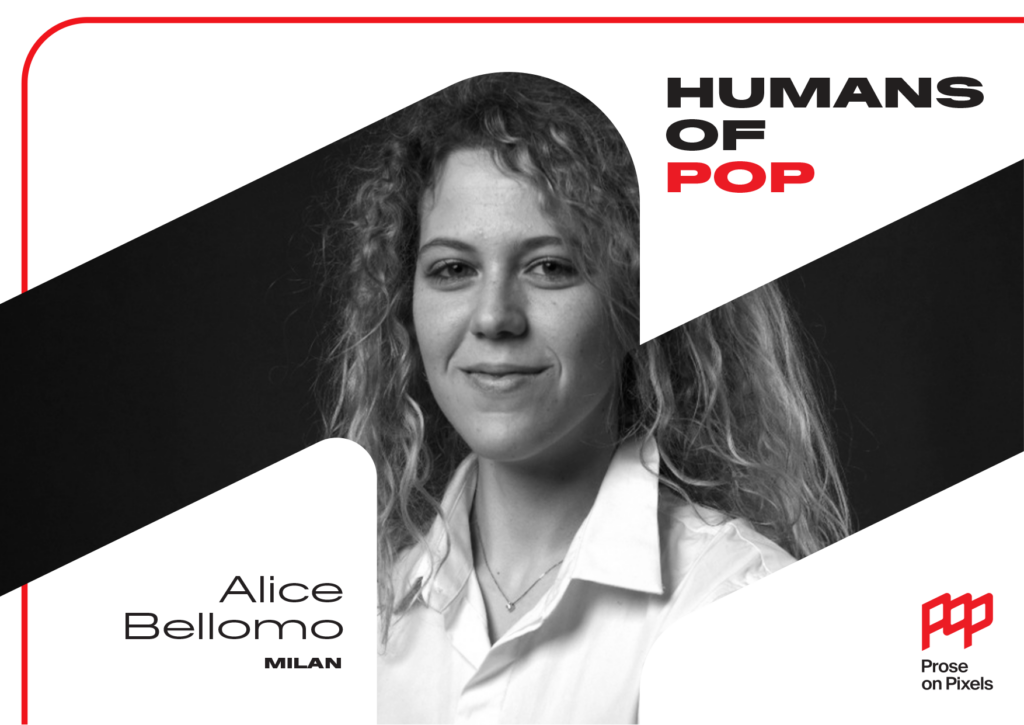
What does a 19th century opera have in common with POP’s work for global clients? For our Milan-based Producer, Alice Bellomo, they’re all part of the same creative language — one built on rhythm, storytelling, and the invisible work that brings ideas to life. From studying painting and sculpture to working behind the scenes in theatre production and audiovisual content, her journey has always been shaped by a fascination with the balance between artistic vision and structure.
Alice first explored creativity through dance, visual arts, and theatre before discovering a deeper interest in production and communication and joining the world of advertising production at POP, where she has been overseeing the development and execution of projects and campaigns for over three years.
In this installment of Humans of POP, Alice shares a bit about how all these universes merge and empower the work she delivers every day.
A bit about your story: where were you born, where did you live most of your life, and what/where did you study?
I grew up in Rosate, a small town in the countryside south of Milan. From an early age, I have identified as an artist: creating, observing, and transforming ideas and emotions into tangible forms has always been the most natural way for me to express myself and engage with the world.
This inclination took on a more structured form during my years at the Brera Art High School, where I studied Figurative Arts, specializing in painting and sculpture. This highly practical training taught me the value of experimentation, craftsmanship, and the creative process.
I subsequently chose to deepen my understanding of art from a more theoretical perspective by enrolling at Università Cattolica del Sacro Cuore, in the Cultural Heritage program with a focus on Theatre, Cinema, Video, and Rituality.
Cinema, in particular, brought me closer to the world of communication and production, allowing me to discover my strong interest in the process of transforming an idea into a structured narrative form.
For this reason, I decided to specialize in production. I began my professional path at Teatro Nazionale di Genova as a set and production assistant, working on set design and supporting two theatre productions, as well as the inauguration of the theatre’s foyer. I then joined Havas as a production assistant, and later moved into POP, where I have been working for the past three years as a Producer. In this role, I am responsible for the development and execution of audiovisual projects and television commercials.
Alice at university when doing her Master’s, in a a workshop focused on directing and production.
What is your role at POP? What does a typical day look like for you?
My role at POP is Producer: I am responsible for bringing together all the different components of a project, from the initial idea through to its execution and final delivery to the client.
If I had to describe a typical day, I would say there is actually no such thing as a “typical” day. My work constantly moves between people, ideas, and unexpected challenges, with the goal of ensuring that everything progresses smoothly and coherently.
Mornings often begin with an overview of ongoing projects: what is moving forward, what requires attention, and where it is necessary to restore order or bring new energy. This is followed by calls with clients, which are never simply operational meetings, but are moments of listening and translation, where the real intention behind an idea is explored.
I then connect with the creative team, where concepts begin to take shape, gradually transforming into images, scenes, and concrete possibilities.
A fundamental part of my role is the more invisible but essential coordination work: managing everything happening behind the scenes, from locations and sets to people and timelines. It is a continuous balancing act that must hold until final delivery.
And then there is the part I enjoy the most: handling the unexpected. Every project evolves and shifts along the way, and my task is to find solutions that keep everything on track without losing sight of the original vision.
Ultimately, being a producer for me means protecting an idea as it grows, giving it structure, space, and clarity until it becomes reality.
What is your background, especially when it comes to theatre and dance? How did you get interested in it, and what drew you to it?
My background is rooted in theatre, dance, and visual arts, which have been part of my path since childhood and represent my earliest structured form of training, both personally and creatively.
I approached this world naturally, starting with classical ballet. It was my first structured experience: it taught me discipline, precision, and the value of consistent, long-term commitment. I later explored contemporary dance, which introduced a more fluid and instinctive dimension, allowing me to express emotion and move beyond more rigid frameworks.
At the same time, visual art has always been a constant presence in my journey. It has shaped my sensitivity and my way of observing reality, developing a strong attention to composition, detail, and visual storytelling.
Theatre came as a natural evolution of this path, bringing together these different experiences. It is there that I discovered the deeper dimension of stage creation: collective work, shared rhythm, and the construction of a narrative shaped by the interaction between people, time, and energy.
What has always attracted me is not only the performance aspect, but everything that makes it possible. I have always been fascinated by what happens “behind the scenes”: the construction, organisation, and invisible balance that allow an idea to become reality.
My training deeply rooted in movement, presence, and visual thinking led me to develop a growing interest in everything that surrounds the stage, and which brought me closer to the world of production that I now inhabit at POP.
What lessons did you learn from your time in performance and stage production, and how do you apply those lessons at POP?
The main lesson I carry with me from my experience in performance and theatre production is the awareness that nothing that appears simple comes into being without structure, listening, and invisible work.
From theatre and dance, I learned that everything has an internal rhythm. This is not only about technical timing, but about the balance between people, energies, and intentions. I learned to recognize when something is aligned and when it requires recalibration, even in subtle ways. This sensitivity is now a fundamental part of how I work.
From theatre and dance, I learned that everything has an internal rhythm. This is not only about technical timing, but about the balance between people, energies, and intentions.
In parallel, my experience in painting and sculpture has profoundly shaped my approach to form, composition, and construction. Working in the studio and with visual matter has trained me to observe proportions, relationships, and spatial balance, further strengthening my awareness of how different elements interact within a whole.
Another important lesson concerns the relationship with the unexpected. In performance, the unexpected is not a mistake to eliminate, but a constant condition to engage with. This taught me not to seek absolute control, but a more flexible form of control, where adaptability is an essential part of the outcome.
In performance, the unexpected is not a mistake to eliminate, but a constant condition to engage with.
Finally, I have deeply internalised the value of collective work. In theatre, dance, painting, and sculpture alike, nothing exists in isolation: every gesture or form only gains meaning in relation to others. This has led me to see every project as a living organism, where every decision has an impact on the whole.
At POP, I apply these lessons in my daily work as a producer. I aim to protect the initial idea without rigidifying it, accompanying it as it takes shape through different people, processes, and timelines. My role is to hold these elements together, maintaining an overall vision while remaining attentive to detail.
How do you think about storytelling in production, and how is that similar or different from the way you approach it in the arts?
For me, storytelling, both in production and in the arts, is never simply about creating content, but about creating meaning. It is the ability to give direction to different elements, keeping them in balance through intention, rhythm, and emotional coherence.
In theatre, dance, and visual arts, particularly painting and sculpture, storytelling emerges from the body, time, and material. Through these disciplines, I learned that a story is not only told, but embodied and constructed, and that every detail contributes to the overall perception of the work, whether performative or visual.
In production, storytelling shifts to a more invisible but equally essential level. It expressed in decisions, the sequence of processes, and the way a project is built and guided toward its final form. It is a narrative that lives within the process itself, just as in the creation of a painting, a sculpture, or a performance.
At POP, this is precisely where my approach is rooted. I try not to separate content from construction. Every project is understood as a unique narrative already in its organisational phase: the way it is conceived, developed, and coordinated is part of its identity just as much as the final result.
What was your favorite project you worked on at POP, and why? What are the similarities between the two?
One of the projects I most appreciated at POP was the collaboration developed a few months ago with HAVAS BETC and POP France for the client La Roche-Posay. The project focused on finding concrete solutions for skin cancer prevention.
In particular, the “Sun Vouchers” concept, developed by the creative department for La Roche-Posay, stood out to me for its ability to translate a communication idea into a concrete action, capable of triggering real behavioural change and raising awareness about the importance of sun protection and the daily use of sunscreen as a preventive measure.
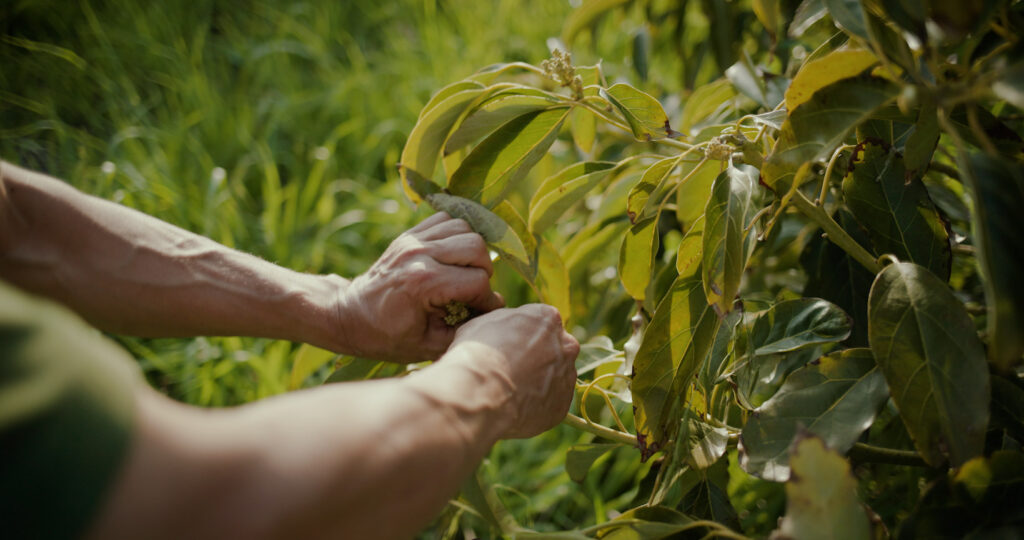
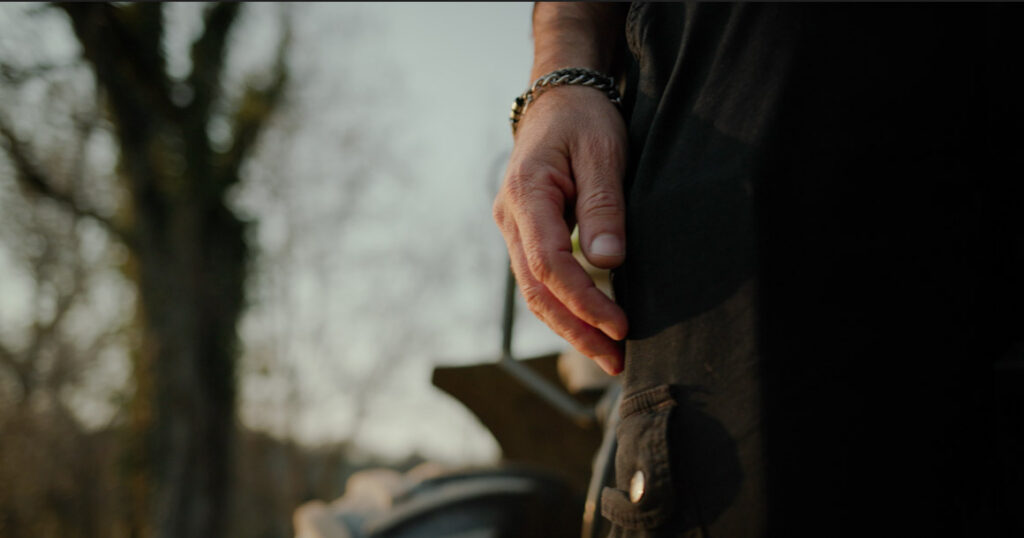
Images from the La Roche-Posay ‘Buoni Sole’ campaign. Produced by POP in collaboration with BETC.
On a personal level, it was a particularly meaningful project, as I was able to follow it from its early stages, contributing to its development and evolution alongside the French team. It was especially stimulating to observe how the concept evolved through continuous dialogue between international teams and different partners, up to its adaptation and activation in Italy.
Another significant aspect was the on-the-ground work: I followed the activation with trips to Franciacorta, Verona, and Sicily, observing how the same idea needed to adapt to very different territorial contexts while maintaining a strong narrative and intentional coherence.
This balance between identity and adaptation naturally connects to my background in theatre, dance, and scenography, where every project is built as an organic system: a central idea expressed through different places, people, and conditions, without ever losing its unity.
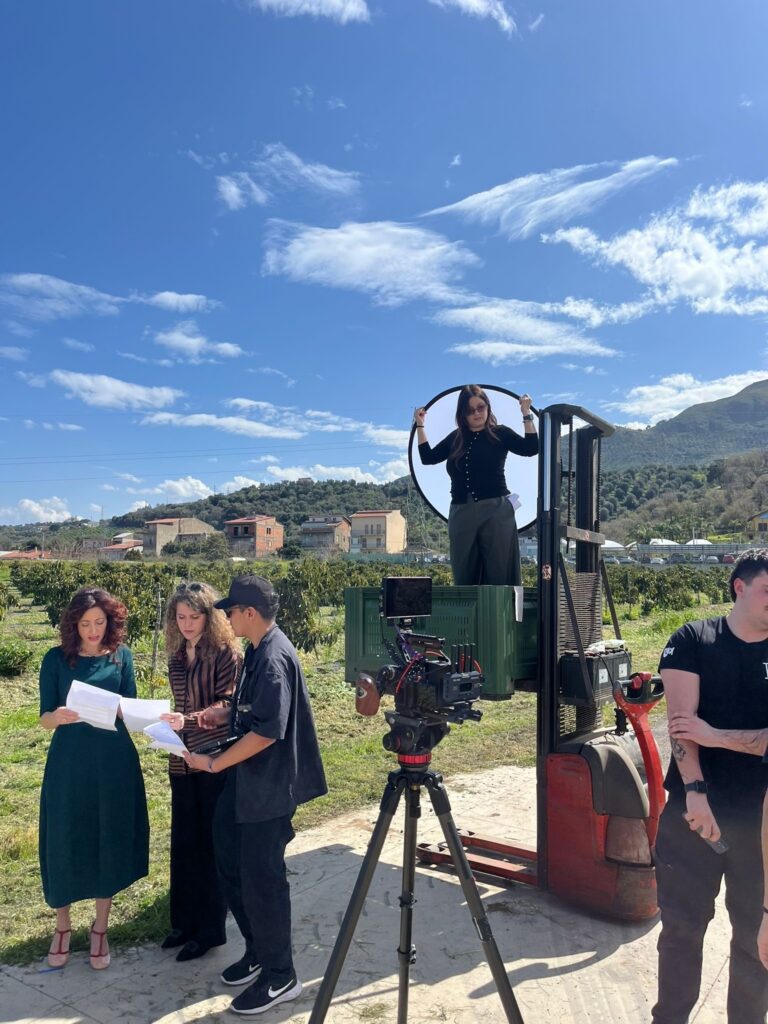
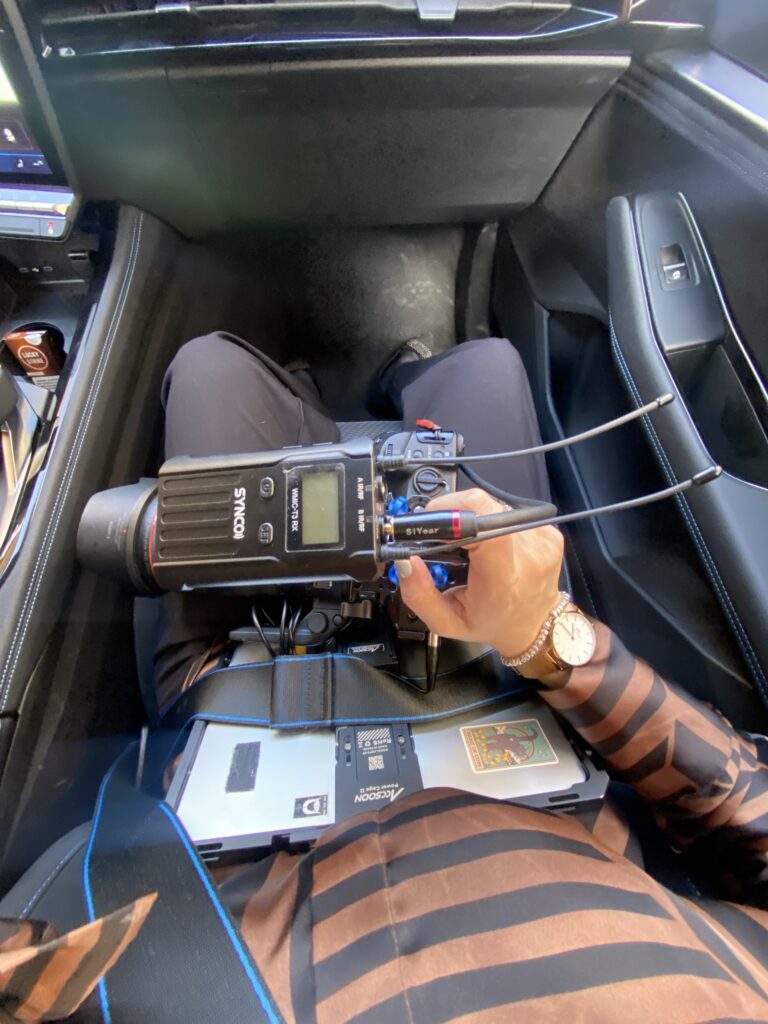
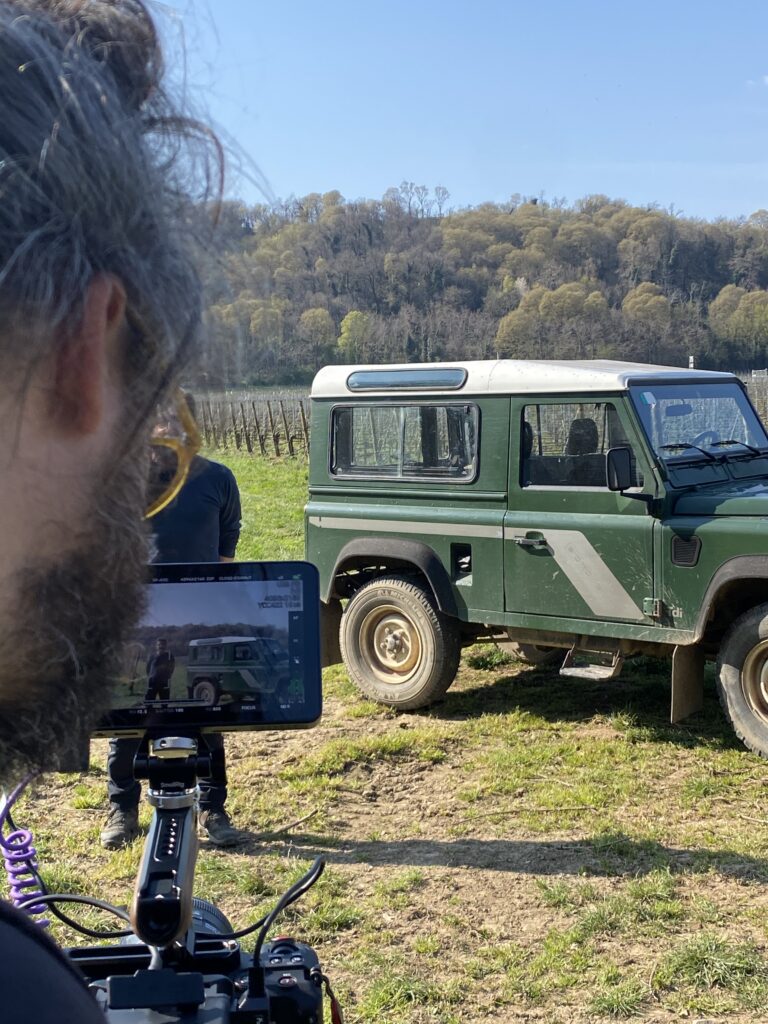
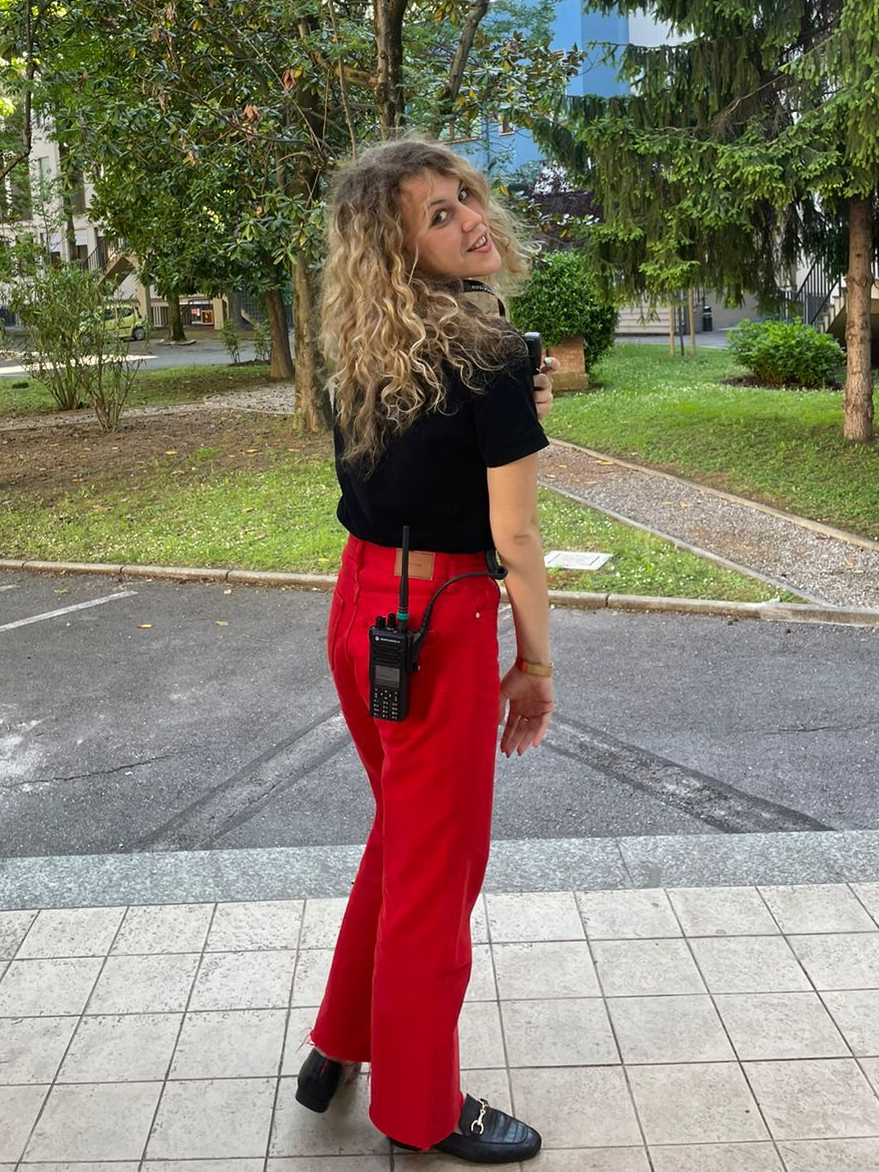
Behind the scenes photos from the La Roche Posay shoot, courtesy of Alice Bellomo.
For example, I supported a theatre foyer restyling project during an opening, working alongside the set design team in sourcing period objects, particularly 19th-century furniture and decorative items. The goal was to create a coherent and immersive environment, capable of conveying a unified atmosphere through different but perfectly harmonised elements. I visited various shops and production spaces between Genoa and Milan in search of props sharing the same visual language, contributing to the continuity and identity of the space.
A related experience was my involvement in the theatre production Maria Stuarda, where, in addition to sourcing props, we worked on the coherence between characters and their stage presence, helping to embed them within a unified visual and narrative language.
Similarly, in the La Roche-Posay project as in theatre and dance, value does not lie in isolated elements, but in their relationships: in the ability to build coherent systems in which each part contributes to the overall narrative, whether it is a staged environment or a real-world activation.
How did your transition from theatre environments to agency and commercial production shape your perspective?
The transition from theatre to the world of agencies and commercial production has profoundly transformed the way I observe creative processes, without changing what I am truly passionate about: giving concrete form to ideas.
Theatre taught me the value of presence, listening, and collective work. It is an environment where everything originates from human rhythm: from relationships, from the timing of the stage, and from the ability to build balance even in the face of the unexpected. There, I learned that every invisible detail contributes to the final success of a narrative.
By entering the world of agencies and advertising production, I discovered a different yet, in many ways, surprisingly similar dimension. I encountered faster processes, more strategic dynamics, and a constant need to translate creativity and vision into concrete, effective, and feasible outputs. This transition taught me how to combine artistic sensitivity with production structure, always maintaining a strong focus both on the identity of the project and on its practical execution.
I believe my theatrical background has given me a particular ability to read projects not only from an organisational perspective, but also from an emotional and narrative one. In this sense, the shift from theatre to commercial production was not a rupture, but a natural evolution of my path: a change of language that allowed me to bring the same narrative sensitivity into contemporary and multidisciplinary contexts.
The shift from theatre to commercial production was not a rupture, but a natural evolution of my path: a change of language that allowed me to bring the same narrative sensitivity into contemporary and multidisciplinary contexts.
How do you balance artistic vision with the practical constraints of production?
Balancing artistic vision and production constraints, for me, means finding a meeting point between what a project seeks to express and what is concretely required to make it possible. I do not see these two aspects as being in opposition; rather, I believe that production plays the role of creating the conditions that allow an idea to preserve its identity even within real-world limitations such as time, budget, or operational complexity.
In my work as a producer, I always aim to protect the original intention of a project while translating it into a clear and sustainable process. This requires listening, mediation, and a highly practical understanding of organisation, but also creative sensitivity. Every production decision, in fact, influences the final outcome just as much as an artistic one.
My background in theatre and the performing arts has taught me that it is often precisely constraints that generate the most interesting solutions. On stage, as in audiovisual production, one must constantly adapt without losing narrative and emotional coherence. It is a balance made of flexibility, problem-solving, and the ability to maintain an overall vision even in the most complex moments.
My background in theatre and the performing arts has taught me that it is often precisely constraints that generate the most interesting solutions.
For this reason, I see the role of the producer as a connective figure: someone who is able to transform a creative idea into something achievable, while preserving its identity throughout the entire production process.
Both performance and production involve working with many different roles — how do you approach collaboration within a team?
For me, collaboration is a continuous process of construction. It means entering into a relationship with different people and perspectives, constantly seeking common ground from which a project can emerge and develop.
In my role as a producer, I experience it as a work of connection: an exercise in translation between creativity, client needs, and the production framework, while maintaining clarity and direction even when viewpoints differ significantly. It is a delicate balance that requires listening, the ability to mediate, and attention to detail, but also the willingness to always preserve a coherent overall vision.
My experience in the performing arts has taught me that collaboration is never a fixed state, but a living system: something that is built and constantly reshaped through relationships. On stage, as in creative processes, every balance is temporary and must be continuously recalibrated.
Collaboration is never a fixed state, but a living system: something that is built and constantly reshaped through relationships.
For this reason, I approach it in a way that is both highly practical and deeply sensitive: as a form of weaving, where each contribution only gains meaning in relation to the others, and where my role is also to foster cohesion, ensuring that each person feels actively part of a truly shared process.
How have you seen the events and production industry evolve in recent years, and what trends do you anticipate shaping the future?
In recent years, I have observed the world of production evolving at great speed, moving toward increasing complexity and, at the same time, a growing demand for synthesis. Projects have become more fluid, faster, and often multi-platform, making the ability to connect creative vision with concrete execution increasingly central, within systems that are ever more layered and interconnected.
What stands out most is that today we no longer simply produce a piece of content or an event, but a continuous experience that must remain coherent throughout its entire journey: from the initial idea through to its distribution. In this sense, the role of the producer has further evolved, becoming increasingly strategic. It is no longer only about coordination, but about maintaining a clear and unified reading of what a project is, even across different formats, languages, and channels.
Looking ahead, I believe the most significant changes will be driven by three main directions. The first is the increasingly deep hybridisation between the physical and digital worlds, where events, content, and platforms do not merely coexist but merge into a single narrative ecosystem. The second is a renewed idea of sustainability, understood not only in environmental terms, but above all as a design principle: the ability to create more conscious, essential, and context-aware productions. The third is a return to the essence of ideas themselves: in an increasingly saturated and accelerated landscape, conceptual clarity will become a defining and differentiating factor.
Within this scenario, artificial intelligence represents an important shift, not as a replacement for the creative process, but as its natural extension. AI is already reshaping the phases of research, organisation, and development, expanding the ability to explore multiple directions in shorter timeframes and freeing space for a more strategic level of thinking. Its most significant impact will likely lie in redefining the balance between execution and conception, making the human ability to choose, interpret, and give direction even more essential.
Artificial intelligence represents an important shift, not as a replacement for the creative process, but as its natural extension.
In this context, the role of the producer is increasingly moving toward that of a synthesising figure: not only someone who manages complexity, but someone who moves through it and translates it into form. A point of connection between technology, creativity, and narrative intention, capable of maintaining coherence within systems that are constantly evolving.
Quick Ones:
Live theatre or film?
Live Theatre!
Favorite artist/director/choreographer?
Van Gogh fascinates me because his work does not stem from the intention to represent reality objectively, but from the need to convey an emotional and inner truth. This is an approach that feels very close to my own understanding of creativity: not as reproduction, but as translation.
What strikes me most is his ability to operate within a fragile balance between intensity and structure: on one hand an expressive urgency, on the other a constant search for form through colour and gesture. In this sense, I see a parallel with my own path between the performing arts and production, where the work consists precisely in giving structure to something that originates from a more instinctive intention.
Song that would be in the soundtrack to your biopic?
The “Book of Love” by Peter Gabriel.
Humans of POP is our storytelling series, created to shine a light on the people making it all happen behind the scenes. Our people are at the heart of everything we do – and this series is all about hearing from them directly. Across continents and cultures, these stories remind us how much we can learn from those around us.
Comments are closed.