
Humans of POP: Steven Petitpas-Polselli, Head of Scale, France & Prague
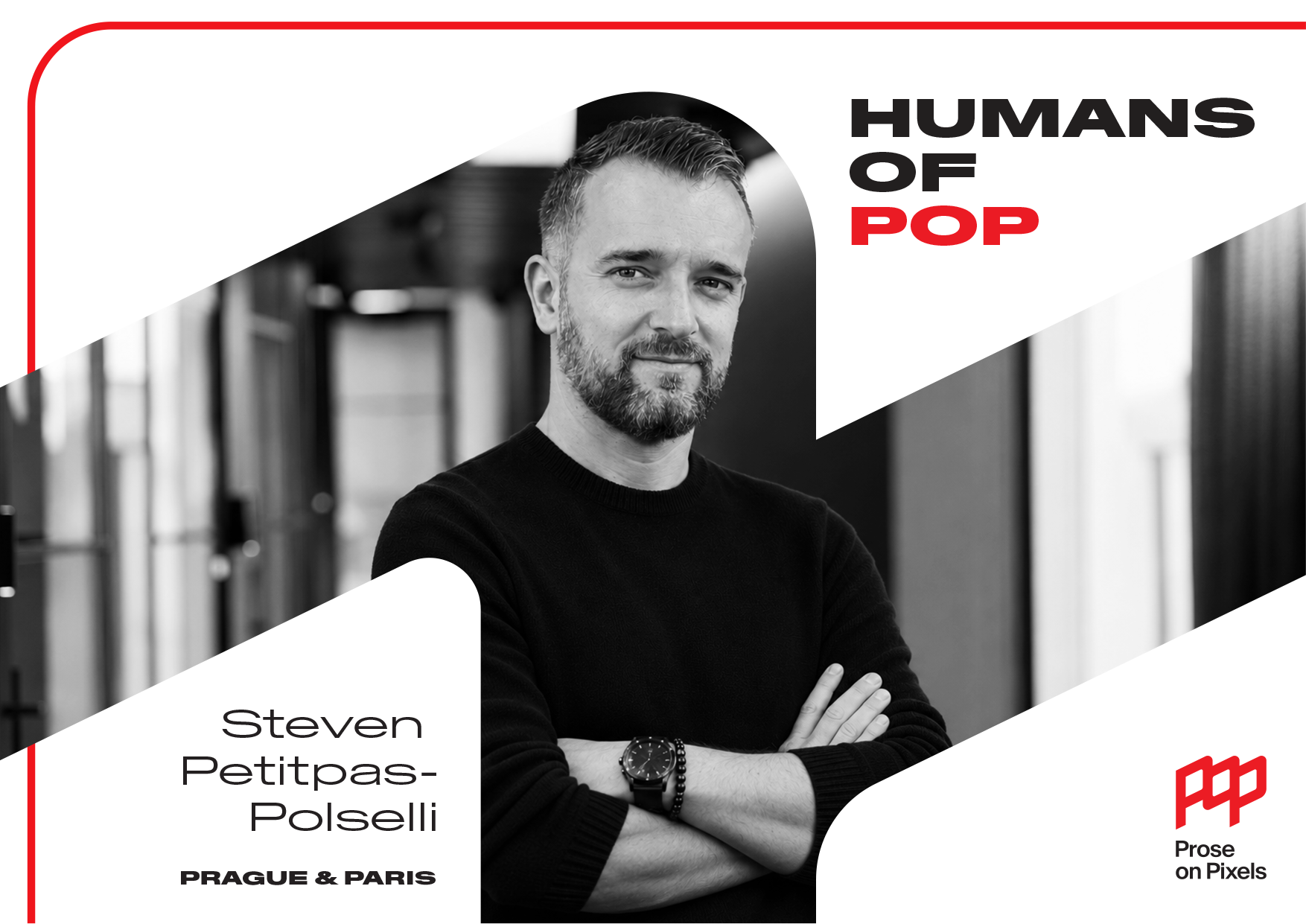
At the age of just five years old, Steven Petitpas-Polselli was already learning to play chess. He would go on to play competitively for more than 20 years, while getting a literary education and crafting a career based on hands-on professional experience. At the heart of it all, chess still shapes how he approaches a challenge: think ahead, weigh the options, and make progress one move at a time.
Today, Steven brings that strategic mindset to his role as Head of Scale for France and Prague. He leads the Prague agency and drives operational transformation across POP France, helping teams work efficiently without losing sight of the creativity at the heart of what they do.
In this edition of Humans of POP, Steven reflects on the connection between chess and problem-solving, how the right structure can help creativity flourish, and the way thoughtful systems make it possible to scale work effectively.
A bit about your story: where were you born, where did you live most of your life, and what/where did you study?
I was born in northern France and grew up in a tiny village of just 300 people (one church, one school, and 200 cows!) about an hour from Paris, before moving to Lille for my studies. I hold a Master’s degree in Modern French Literature, with a specialization in the dramaturgy of Samuel Beckett.
What I’ve learned about content production, operational excellence, lean management and business process improvement has come from hands-on experience throughout my career, rather than from formal education.
What is your role at POP? What does a typical day look like?
I wear several hats at POP. I run our agency in Prague, Czech Republic, and I’m also responsible for operational transformation programs across POP France.
I’m based in Paris, but I travel quite a lot, particularly to Prague, where I like to work closely with my teams on the ground. They specialize in the international deployment of creative campaigns, including transcreation, localization and adaptation.
So there’s really no such thing as a typical day! My role involves a mix of business management, operational excellence, people management and transformation, with a strong focus on how we can make our operations more efficient and scalable.
You played competitive chess for more than 20 years. What first drew you to chess, and how did you progress to competing at national level?
I actually learned to play chess when I was five, thanks to my brother, who had started learning at school.
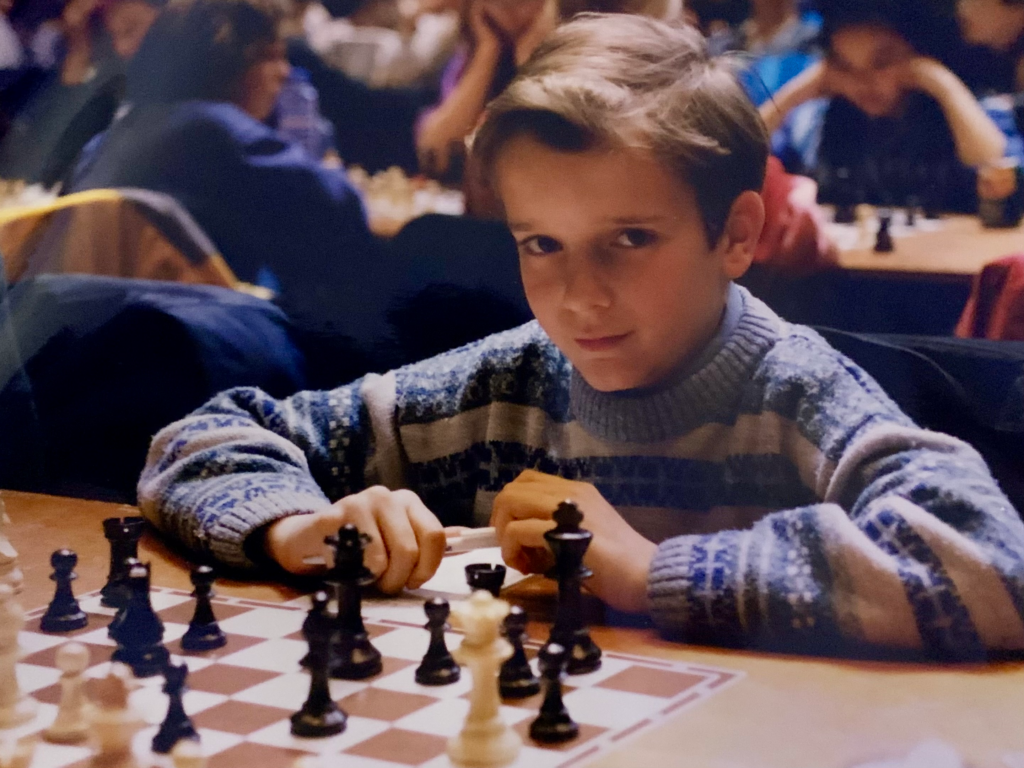
I joined a chess club that same year, and from then on, chess became a huge part of my childhood. I had lessons every Wednesday, tournaments or interclub competitions most weekends, and my holidays were often spent competing in championships, particularly the French Youth Championships every summer. We also had a Ukrainian Grandmaster who regularly came to our house to coach us.
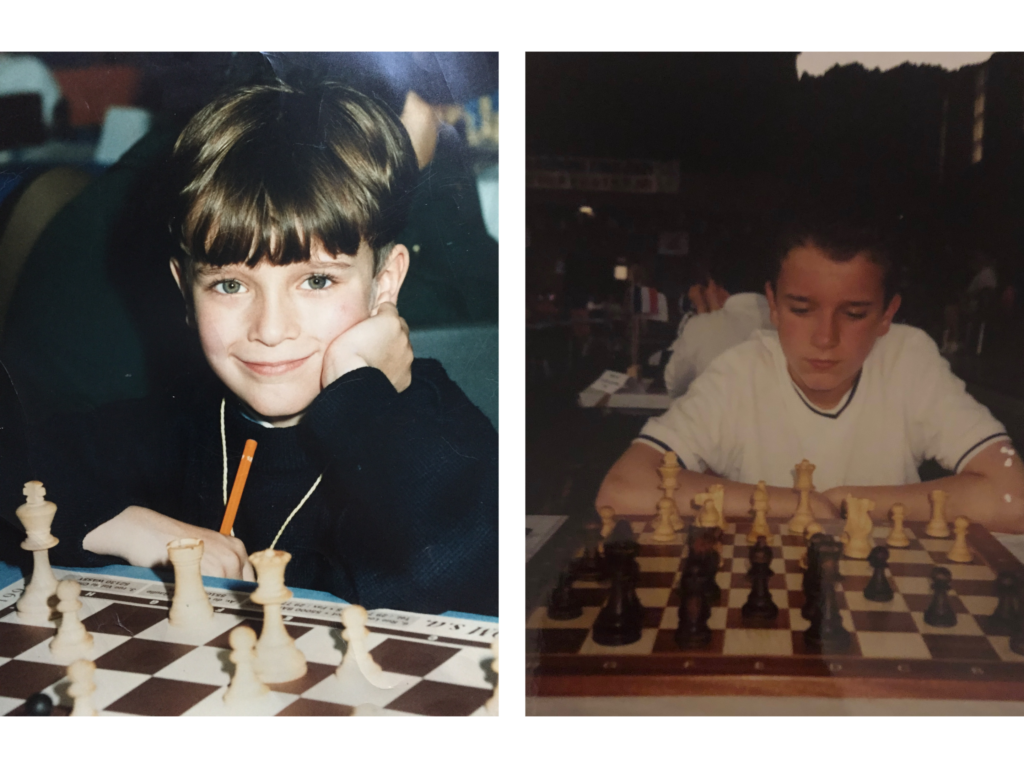
I won almost every regional title in my age category until my teenage years and managed to finish in the top 10 at several French Youth Championships. One of my proudest achievements was finishing runner-up in the French Under-16 Blitz Championship.
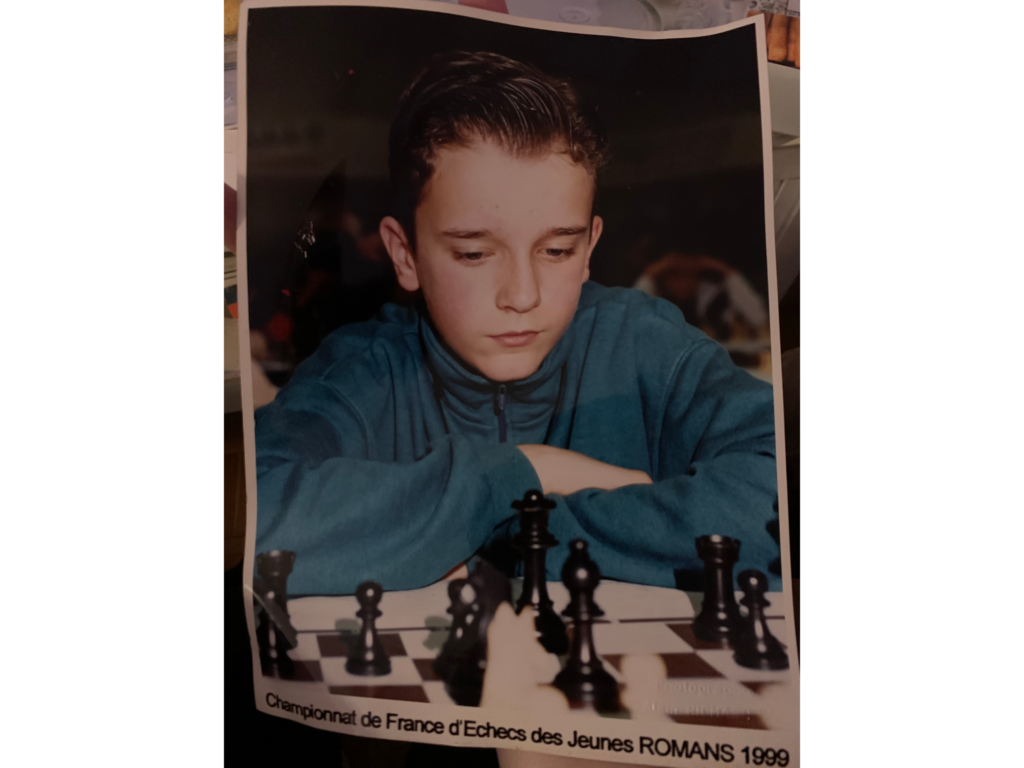
Back then, chess was still considered a nerdy thing, something you could easily get made fun of for. That was long before Netflix’s “The Queen’s Gambit” and mainstream content creators helped turn chess into something cool.
Was there a particular chess coach, opponent, or game that changed how you think about strategy?
Not one in particular. Chess is fundamentally a game of strategy and tactics, and I think playing it from such a young age shaped the way I think: how I structure my reasoning, sequence ideas, visualize possibilities and solve problems.
Today, I genuinely enjoy mapping processes, figuring out how to optimize them, and making organizational decisions based on data and calculations.
And I suspect I owe that more to the years I spent playing chess from kindergarten onwards than to my literary education!
What is the first thing you do when you’re presented with a challenge – and how does your background in chess impact the way you tackle problem-solving?
First of all, I love problems. Visible problems, to be precise. Because once a problem is visible, you can start working on solving it.
The worst situation is when you think you have no problems. Because, in reality, you always do!
Then, just like in chess, it’s about building a solution step by step, move by move. When there’s no obvious answer, a series of small, concrete actions can already help you make progress. What matters is to get things moving, but in a thoughtful and structured way.
How do you introduce structure in a way that supports creativity rather than constraining it?
Great question! I think we’re often too quick to oppose structure, rules and creativity.
Creativity isn’t about unlimited freedom. In fact, creating within constraints can require an extraordinary amount of imagination and resourcefulness.
I’m thinking, for example, of the Oulipo literary movement (Ouvroir de Littérature Potentielle) and writers like Georges Perec, who wrote an entire 300-page novel, La Disparition, without using the letter E!
The same applies to our industry. Coming up with new creative ideas while respecting a brand’s identity, or defining an entirely new brand territory while meeting a client’s business objectives, involves constraints. But those constraints don’t necessarily limit creativity. Quite the opposite.
And let’s not forget chess. Some players are true virtuosos, and chess is widely considered an art form, despite its strict rules and the limitations of a board with just 64 squares.
What’s one assumption about scaling creative work that you’ve had to rethink at some point in your career?
I used to think that scaling creative production was primarily about standardization: defining processes, building templates and making production more efficient.
Over time, I’ve come to realize that scale isn’t necessarily about doing the same thing over and over again. It’s about building the right systems to handle complexity and variation without compromising quality.
The goal isn’t to standardize creativity. It’s to standardize what doesn’t need to be creative, so people can focus their time and energy on what really matters.
As Head of Scale across France and Prague, how do you make sure shared processes work for both teams while leaving room for local differences?
I believe in having common principles rather than imposing identical ways of working everywhere.
You need shared objectives, clear responsibilities, consistent quality standards and common KPIs. But how teams achieve those objectives can vary depending on their expertise, organization and local context.
For me, the key is to distinguish between what genuinely needs to be standardized and where flexibility actually creates value.
How do you see AI changing industries like ours — and could it meaningfully change a traditional pursuit like chess?
Chess is actually a fascinating example because AI transformed the game long before generative AI became mainstream.
Computers surpassed the best human players decades ago, but they didn’t kill chess players. Quite the opposite. They changed the way players prepare, analyze positions and understand the game. Today, even the strongest grandmasters use engines to explore ideas they might never have considered on their own.
I think something similar is happening in our industry.
AI will automate a growing share of production tasks, but its real potential goes beyond automation. It can help us explore more possibilities, make better-informed decisions and produce creative work at a scale that was previously impossible.
The challenge is making sure technology enhances human creativity rather than simply replacing human judgment.
Looking ahead, how do you see the relationship between creativity, data, and scale evolving at POP?
I think we’re moving towards a model where creativity, data and scale are no longer separate stages of a process, but parts of the same integrated system.
Creative ideas will increasingly be informed by audience insights and performance data, while technology will allow us to adapt and deploy those ideas across markets, channels and formats at scale.
But the ambition shouldn’t simply be to produce more content, faster.
Ultimately, we’re here to build brands, not just fill media spaces. And I believe the combination of human creativity, intelligent use of data and scalable production is what will allow us to do that more effectively.
Quick ones:
Favorite or go-to chess opening?
With White, I’m a big fan of the Closed Sicilian and the Grand Prix Attack. It’s an aggressive system that can be very effective, even against experienced players who aren’t completely familiar with the variations.
Chess concept or metaphor you find yourself using to explain things to colleagues?
I often talk about the difference between strategy and tactics. Strategy is about the long-term vision, while tactics are about concrete, short-term actions that help turn that vision into reality.
In chess, a good strategy creates opportunities, but it’s often tactics that allow you to seize them. And sometimes, a tactical opportunity can even change your entire strategy.
I think the same applies to business. You need a clear direction, but also the ability to translate it into concrete actions, move by move. Even small wins can add up to meaningful progress.
Playing digitally or IRL?
Mostly digitally these days, on Chess.com, although I still enjoy playing over the board whenever I spend time with my brother.
I stopped playing competitively 15 years ago, but chess is still very much part of my life.
And since I love data, here are a few numbers: I joined Chess.com in April 2023 and have played 8,536 games since then, with a 48.3% win rate, 46.3% losses and 5.4% draws, and my current percentile is 99.2%. Fancy a game?
Humans of POP is our storytelling series, created to shine a light on the people making it all happen behind the scenes. Our people are at the heart of everything we do – and this series is all about hearing from them directly. Across continents and cultures, these stories remind us how much we can learn from those around us.
Comments are closed.