
Humans of POP: Jeff Corrin, Production Operations Director UK
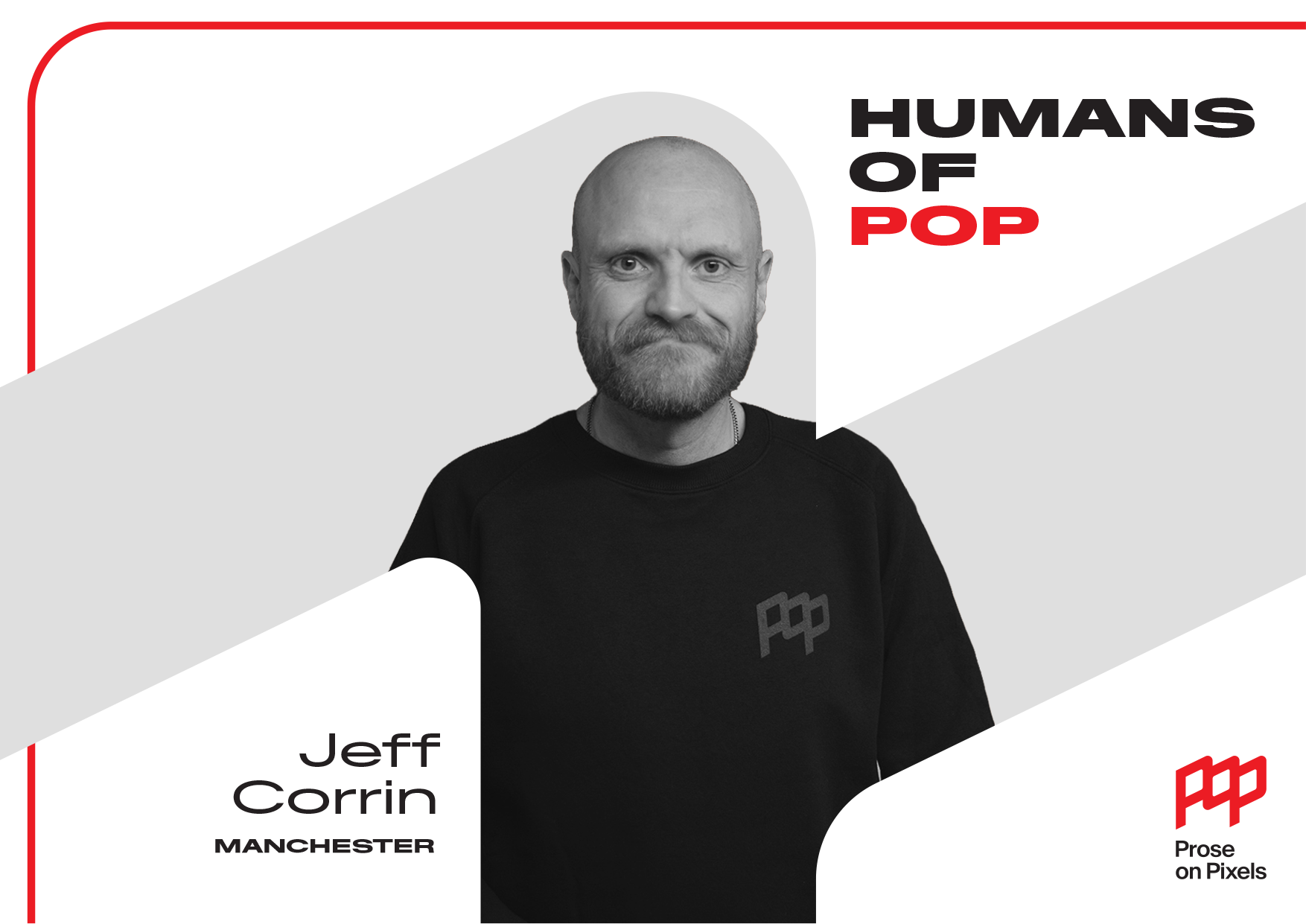
Making the impossible happen – that’s what drew Jeff Corrin to production in the first place.
Now as Production Operations Director at POP, he does it every day. Throughout his career in production, he’s navigated some of the UK’s most vibrant creative communities and adapts those lessons to his work at POP.
His hands-on beginnings in post-production and production coordination, now informs the way Jeff manages and works with teams across the UK: integrating workflows, supporting multi-market projects, and ensuring that creativity and operational reality works hand in hand.
Keep reading this installment of Humans of POP series to hear more from Jeff about how he’s helping build a unified, flexible, and creative production operation – and how a career built on hands-on learning, curiosity, and problem-solving continues to shape the way he leads, plans, and inspires teams every day.
A bit about your story: where were you born, where did you live most of your life and what/where did you study?
I was born in Warrington and have spent the majority of my career between Liverpool and Manchester, two cities with strong creative and production communities. I also spent time working in Los Angeles, which gave me valuable exposure to a very different production culture and pace.
I built my career through hands-on experience across production and post-production coordination, working in genres ranging from live news to entertainment, reality tv, big budget drama and daytime programming. Understanding the unique delivery expectations of each has informed my leadership approach, placing strong emphasis on planning, communication, and reliable execution.
Understanding the unique delivery expectations of each has informed my leadership approach, placing strong emphasis on planning, communication, and reliable execution.
What is your role at POP?
As Production Operations Director at Prose on Pixels, my role is to drive operational excellence and efficiency across all production teams and projects in the UK. This includes direct oversight and responsibility for the digital and tech teams, ensuring their integration and optimal performance within the wider production ecosystem. I work with the Head of Production, Creative Production Director, and other senior leaders to refine workflows, champion continuous improvement, and support the agency’s commercial and creative ambitions.
What originally drew you to production?
I was drawn to production because it sits at the intersection of creativity and problem-solving. From the beginning, I enjoyed being the person who could help ideas move from concept to reality, figuring out how to make the impossible happen. It requires calm under pressure, and the ability to adapt quickly. No two days are the same.
I was drawn to production because it sits at the intersection of creativity and problem-solving.
Beyond my professional experience, I have a deep passion for television, film, and the broader content landscape, which drives my work in the content creation industry and informs me of the perspective I bring to every project.
You spent over five years as part of the ITV production team. What were some of the early lessons you learned during your time at ITV that stayed with you?
ITV taught me the importance of rigor and preparation. Broadcast deadlines don’t move, so you learn very quickly how critical planning, communication, and contingency are.
I also learned the value of respecting every role in the process. From editors to facilities teams to external suppliers, successful delivery depends on everyone being aligned and supported. That understanding has stayed with me throughout my career.
What has your role taught you about leadership?
Leadership isn’t about having all the answers, it’s about creating clarity and trust, especially under pressure.
My roles have taught me that good leadership means listening and making decisions that support both the people doing the work and the work itself. It’s about removing obstacles, setting clear expectations, and giving teams the confidence to do their best work.
How did your time at ITV and other experiences before POP change the way you prepare for the unexpected? How does that mindset show up in global, multi-market productions now?
Working in broadcast and fast-paced production environments taught me to plan ahead based on various hypotheticals that could create challenges. Things inevitably change and having a backup (or few) isn’t just best practice, it’s survival.
Things inevitably change and having a backup (or few) isn’t just best practice, it’s survival.
I aim to approach projects with built-in flexibility. On global, multi-market productions, that mindset is essential. Different time zones, stakeholders, and delivery requirements mean you must anticipate risk, plan, and stay adaptable without losing momentum.
As Production Operations Director, you rely on strong relationships with clients and colleagues. How do you go about nurturing these relationships?
For me, it starts with trust and transparency. I’m open about what’s possible, where there are challenges, and any potential high-risk decisions that need to be made.
Clients and colleagues value honesty, especially when timelines or budgets are tight.
I also believe strongly in being present, which means staying engaged throughout the lifecycle of a project, not just at key milestones.
How do you balance creativity with operational realities like timelines, budgets, and resources?
Creativity and operations aren’t necessarily opposing forces. In my experience, clear structure enables better creativity. Expectations are managed, and guardrails allow for flex while staying within crucial timings and budgets. By setting realistic parameters early around budget, schedule, and resources, creatives can focus on solving the right problems rather than reacting to late surprises. It’s important to respect the creative vision while making sure it’s achievable and sustainable.
By setting realistic parameters early around budget, schedule, and resources, creatives can focus on solving the right problems rather than reacting to late surprises.
Can you tell us about a project you’re most proud of – past or present?
One of the projects I’m most proud of has been working as part of the team integrating Manchester and London teams into a single, unified UK production operation. What began as two geographically 4 separate teams with different ways of working became a more connected, collaborative unit with shared standards and broader capabilities. The focus was on creating consistency without losing local strengths. We aligned workflows and resourcing models so teams could collaborate seamlessly across locations. This allowed us to maximise utilisation, respond more flexibly to project demands, and deploy the right skills at the right time, regardless of location.
Beyond the operational benefits, the integration helped foster a stronger team culture. By encouraging knowledge-sharing, we broadened individual and collective capabilities, reduced silos, and created more opportunities for growth and development.
By encouraging knowledge-sharing, we broadened individual and collective capabilities, reduced silos, and created more opportunities for growth and development.
The result has been a more resilient, scalable UK team that supports the business’s growth ambitions, strengthens client delivery, and creates a foundation for future expansion. It’s a project that reflects my belief that strong operations, when built thoughtfully, can unlock both creative and commercial success.
How do you see production continuing to evolve, especially as technology, speed, and client expectations accelerate?
Technology continues to open incredible new possibilities, but it has also raised expectations around speed and flexibility. I think the future of production lies in smart operations. To me, this means agile workflows, clearer communication, and leaders who can bridge creative ambition with operational reality. This means the human side of production (trust, judgement, and experience) will become even more important.
Quick ones:
One production rule you always live by?
The process supports the work, rather than constraining it.
In production, no matter how detailed your schedule or how well you’ve scoped a project, something will inevitably change, a client revision, a technical hiccup, or a last-minute creative shift. My rule is to build robust plans that anticipate challenges but stay adaptable enough to respond quickly when things change.
This approach keeps projects on track, teams confident, and creativity flowing.
What does “great production” mean to you today, and how has that definition evolved since your early TV days?
Early in my career, great production meant big budgets, big cameras and big production sets fronted by celebrities. Over the course of my career it changed to getting everything delivered on time and to spec. This is still the case today but with added focus on maintaining strong relationships and creating processes that teams want to work within. It’s about consistency, care, and long-term value, not just hitting a deadline.
The best advice someone gave you – or the advice you wish you’d received early in your career?
Early in my career, I learned that production is full of moving parts, tight deadlines, and unexpected challenges. One piece of advice that has stuck with me is to always concentrate on finding solutions rather than dwelling on the problem.
That mindset has shaped the way I lead teams, manage projects, and collaborate with clients. It keeps everyone focused, reduces friction, and fosters a culture of accountability and trust, even under pressure.
Humans of POP is our storytelling series, created to shine a light on the people making it all happen behind the scenes. Our people are at the heart of everything we do – and this series is all about hearing from them directly. Across continents and cultures, these stories remind us how much we can learn from those around us.
Comments are closed.