
Campaign Spotlight: Renault x FFR, “Fières comme un coq”
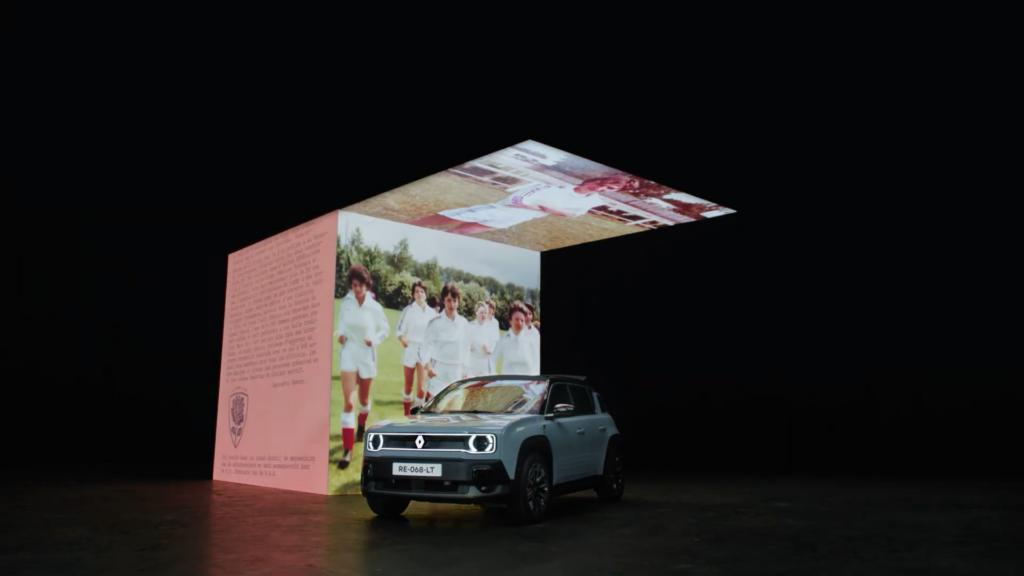
The year was 1982. The French women’s rugby team took to the pitch for their very first international match in history. But since rugby was considered a man’s sport, their jerseys were missing a crucial symbol of French sport for over 100 years: the Gallic rooster, or coq.
44 years later, those pioneering players finally wore the iconic coq. Renault and the French Rugby Federation presented the members of the 1982 team with thoughtfully designed nostalgia-inspired jerseys in a powerful symbol of how far women’s sports have come.
Helping to bring it all together was Yael Guetta, Head of Production at POP in France. With over 15 years of experience in content and advertising agencies, she specializes in producing impactful work— from TV commercials and brand films to digital and social content. Read on to hear her behind-the-scenes insight on this inspiring campaign.
What was your role in this campaign?
As Head of Production and producer at POP, my role was to bring the creative idea to life in a way that felt cinematic, emotional, and respectful of the women at the heart of the story.
This was not a classic brand film. It was about giving recognition to the women of the 1982 French rugby team, who had never been given the coq on their shirt. I worked closely with director Thomas Wood throughout the process to create the right production conditions and make sure the film felt both authentic and powerful. My role was also to structure the production, align the creative ambition with the timeline and budget, and make sure the film could live powerfully across both TV and digital.
How did you balance the historical storytelling of 1982 with the forward-thinking, modern identity of Renault?
We treated 1982 not as nostalgia, but as the starting point for a contemporary gesture.
The campaign looks back at an injustice from the past, but Renault’s role was to help turn that history into recognition today. That balance was key: honouring the emotional weight of the story while making it feel modern, relevant, and connected to Renault’s values.
How was POP’s audience-first approach important in this campaign — especially when working with two stakeholders, Renault and FFR?
The audience-first approach helped us keep the focus on the emotional story, not on the institutions behind it.
With Renault and the FFR involved, it was important that the film never felt too corporate. The audience needed to understand very quickly why this gesture mattered and why these women deserved this recognition. Keeping them at the centre made the role of both stakeholders feel natural and legitimate.
The audience-first approach helped us keep the focus on the emotional story, not on the institutions behind it.
The campaign spans multiple formats, including print and video. How do you maintain a consistent narrative across different production outputs?
It starts with one clear emotional idea: the return of the coq, and the recognition of these pioneers.
From there, each format can express the same story in its own way. The film builds emotion through time, faces, and rhythm, while print has to capture that same feeling all in one image. The key is to keep the same tone, dignity, and visual coherence across all outputs.
What does “success” look like for you for a project like this — beyond metrics and reach?
For me, success is when the story feels true and the people at the centre of it feel genuinely honoured.
Of course, visibility matters, but on a project like this, the real measure is emotional impact: if the audience understands the meaning of the gesture and feels the pride, recognition, and transmission behind it, then the campaign has succeeded.
The main lesson is that scale should never dilute the heart of the story. The bigger the campaign, the more important it is to protect its simplicity and sincerity.
What did this project teach you and your team about producing emotionally driven, real-time campaigns at scale? What lesson(s) will you take from this project into future projects?
It confirmed that emotion needs structure.
When working with real people, a real historical story and a live sporting context, everything has to be carefully prepared so the emotion can feel natural on screen. The main lesson is that scale should never dilute the heart of the story. The bigger the campaign, the more important it is to protect its simplicity and sincerity.
Want to see the Renault x FFR campaign for yourself? Check out our posts on Instagram and LinkedIn for more, and follow us to make sure you never miss a thing.
Comments are closed.